Empowering Children’s Voices: Local Advocacy and Participation in UN Mechanisms
Across the world, Marist Brothers accompany children and young people living in vulnerable, fragile, or often invisible realities. Yet, despite this deep presence in local communities, many Marist works still lack the tools to amplify the voices of the children they serve, or to influence public policies and structures that shape their lives.
It is from this conviction—and from a clear call emerging from the XXII and XXIII General Chapter and the MIMA III Assembly—that a new and ambitious Institute-wide initiative is being launched: a global training program to form Marist child-rights advocates aligned with the UN system and deeply connected to the lived experience of our ministries.
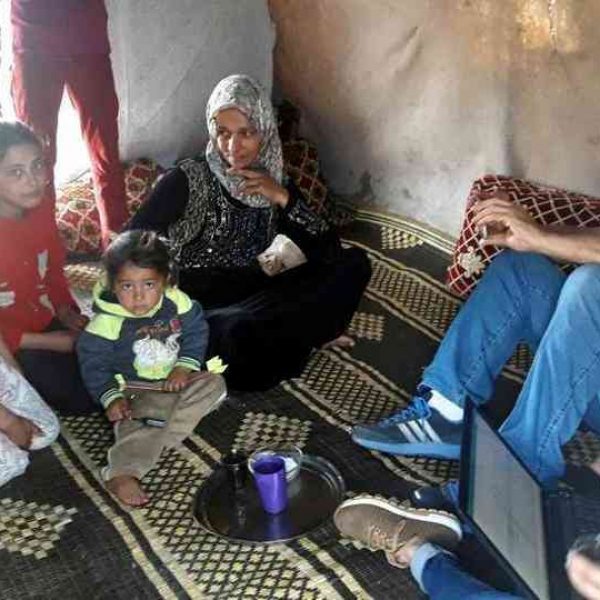
In many parts of the Marist world, brothers and lay people feel the need to engage more effectively with child-rights standards, but they are not always familiar with tools such as the UN Convention on the Rights of the Child or mechanisms like the Universal Periodic Review (UPR). Others work in contexts where governments make commitments in Geneva—but few people on the ground know how to monitor whether those promises are kept. Children and young people, especially those in vulnerable conditions, often remain unheard in processes that fundamentally affect their future.
This new initiative directly responds to these gaps—not simply as a training course, but as a transformative process designed to create a ripple effect across all Marist Provinces. By developing local advocacy capacities in each administrative unit, the program intends to gradually influence schools, social works, formation processes, project offices, and leadership structures, ensuring that child-rights advocacy becomes an integral and sustainable part of Marist identity everywhere we are present.
Trained advocates will not work in isolation: each will return to their Province with a concrete action plan and the responsibility to build local teams, engage children and young people, and accompany processes that can shape public policies at national and international levels.
This initiative does not begin from zero. It stands on a rich legacy of work that FMSI and the Marist Brothers Institute itself have already carried forward. Over the past years, our engagement with the Universal Periodic Review has generated a wealth of experience: stories from the field, testimonies from children, and concrete recommendations that have reached discussions in Geneva.
Much of this journey has already taken shape in the tools we have created. An interactive UPR map now traces every country where Marist communities have contributed to the UPR, revealing how voices from classrooms, youth centers, refugee projects and remote missions have gradually converged into a global advocacy effort. The UPR booklet provides a comprehensive guide to the Universal Periodic Review process, detailing how Marist missions can engage with this powerful UN mechanism. It offers practical steps, key insights, and best practices drawn from over 80 UPR submissions, ensuring that every voice, especially that of children, can be heard on the global stage.
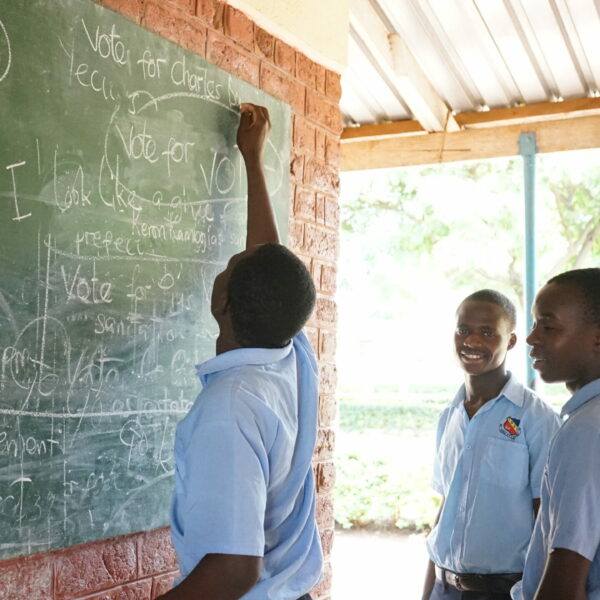
In this regard, here’s an example of our ongoing work: how we actively involve children and ensure their experiences within local Marist initiatives are heard on an international platform, ultimately influencing national policies.
At the heart of this initiative is the UPR. The Universal Periodic Review is one of the most powerful and accessible human-rights instruments available to civil society, and meaningful participation of NGOs is crucial at every stage: from grassroots consultations with children, to report writing, to oral statements in Geneva, to monitoring the implementation of recommendations at national level. This training program strengthens that legacy by empowering Provinces themselves to lead future contributions.
Over the next two years, the initiative will train Marist brothers and lay people to become child-rights advocates. The formation journey will include:
- Online modules introducing UN mechanisms, the CRC, the UPR, and child participation. · Immersive sessions in Rome and Geneva, including UN observations, meetings with human-rights actors, and drafting exercises.
- Local action plans tailored to each Province, integrating advocacy and safeguarding into ministries. · UPR engagement, including workshops with children and youth to ensure their voices shape the recommendations submitted to the UN.
- Ongoing mentoring from the Secretariat of Solidarity and FMSI, to accompany implementation and encourage replication in local teams.
The initiative resonates strongly with the broader mission of the Church. In recent years, the Church has reaffirmed that the protection of minors is not a mere administrative responsibility but a core expression of the Gospel itself. Transparency, accountability, formation, and co-responsibility are essential for ensuring the dignity and well-being of every child.
This program embodies exactly that: a faith-driven commitment to ensure that every child is seen, protected, and heard.
More than a formation opportunity, this initiative represents a strategic choice for the future of the Institute. It seeks to build a global network of Marist voices capable of advocating for children across multiple levels. Beyond the direct participants, the impact will reach thousands of children across Marist schools, social works, and pastoral programs, ensuring that rights-based approaches become a natural and visible part of our mission.
Ultimately, this initiative expresses a simple yet powerful belief: children are not passive recipients of care, but active holders of rights and agents of change.
By investing in this global process, the Marist Institute affirms its responsibility to accompany them—not only in the classroom or the playground, but also in the public spaces where decisions about their lives are made.
This marks the beginning of a new chapter: one in which Marists stand more firmly, more consciously, and more courageously beside the world’s children, ensuring that their dignity is defended and their voices are heard.