
School gardens for sustainable education and empowerment in Haiti and Mexico
Children are not only beneficiaries of change, but powerful agents of transformation. Through the project CARE – Children’s Action for a Resilient Environment, implemented in Haiti and Mexico, children become true seeds of change, cultivating resilience, environmental awareness, and social justice within their schools and communities.
At the heart of the initiative are school gardens, conceived not merely as spaces for food production but as living classrooms where children learn about nutrition, biodiversity, climate resilience, and their fundamental rights. Rooted in the principles of integral ecology, the project responds to interconnected challenges such as food insecurity, malnutrition, educational exclusion, and environmental degradation, particularly affecting children in vulnerable contexts.
In Haiti, the project operates in a context marked by extreme poverty, food insecurity, and the persistence of the Restavèk system, a form of child domestic servitude that deprives thousands of children of education and protection. By integrating school gardens into the educational framework of Marist Centres, the initiative improves access to nutritious food while strengthening children’s right to education. For many Restavèk children, the garden becomes a space of dignity and belonging, where learning, care, and participation replace exploitation and exclusion. Through hands-on activities, children gain practical skills, improve their nutritional status, and develop confidence as active contributors to their own well-being and that of their communities.
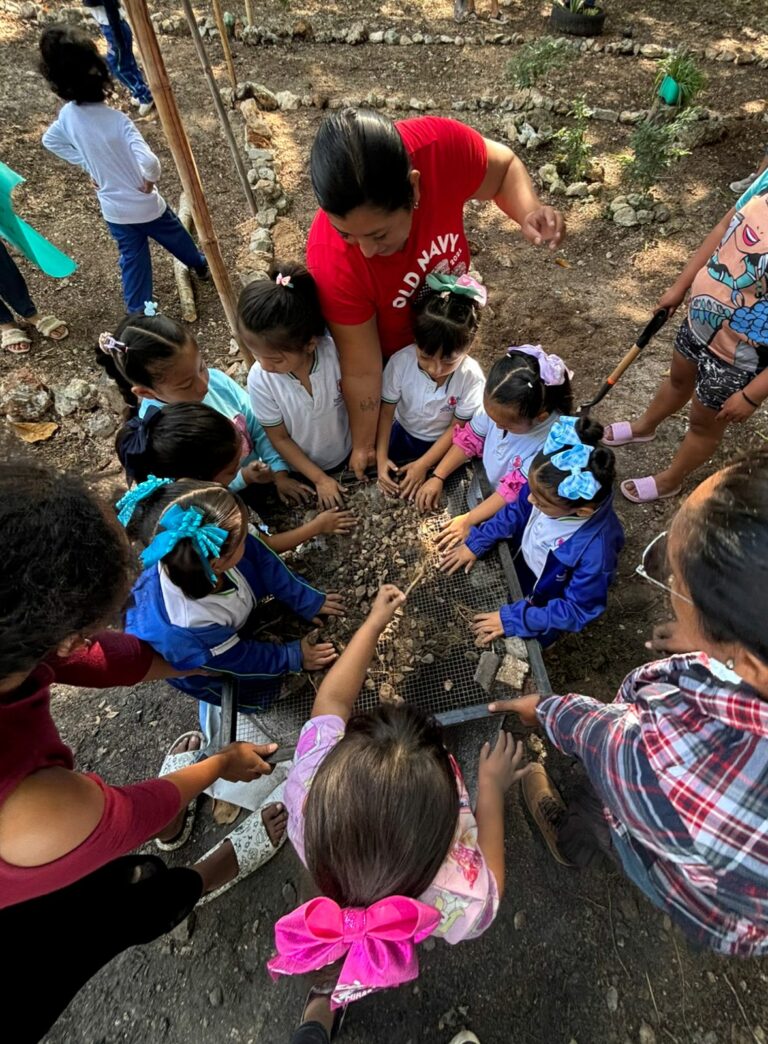
In Mexico, the project focuses on indigenous Maya communities in the Cuxtal Ecological Reserve in Yucatán, an area of high environmental value but deep social inequality. Here, school gardens help reconnect children with traditional agroecological knowledge, promote healthy and culturally rooted diets, and strengthen environmental stewardship from an early age. Working in close collaboration with the Marist University of Mérida and public education authorities, the initiative supports the institutionalization of food education within the school system, ensuring long-term sustainability and scalability.
Across both countries, children play a central role in the project’s design and implementation. They actively participate in cultivating gardens, monitoring growth, learning climate-resilient practices, and sharing knowledge with their families. In doing so, they become advocates for healthy food, environmental protection, and community resilience. The project also integrates a strong rights-based approach, addressing gender equality, inclusion of children with disabilities, and the empowerment of children in the most marginalized conditions.
Beyond the school environment, CARE fosters community engagement and policy dialogue.
Families, teachers, local authorities, and civil society actors are involved in building shared ownership of the initiative, while project outcomes contribute to broader advocacy efforts – including the integration of results into Haiti’s Universal Periodic Review (UPR), reinforcing food security and education as fundamental human rights.
By transforming school gardens into spaces of learning, protection, and participation, CARE demonstrates how children, when empowered and supported, can become catalysts for lasting change. As seeds of change, they nurture not only plants, but also hope, dignity, and a more just and sustainable future for their communities.

The project in Numbers:
1.188
Children are directly involved in inclusive education, nutrition, and environmental learning through school gardens.
1.998
People indirectly reached, including families and community members, through improved food practices, awareness, and knowledge transfer.
9
School gardens were established and operational as living classrooms for sustainability, nutrition, and children’s rights.
471
Children regularly monitored for nutritional indicators (weight and height), strengthening prevention of malnutrition.
171
Restavèk children in Haiti supported through access to education, protection, and nutritious food.
70
Teachers trained in food education, agroecology, and garden-based learning methodologies.
6
Schools with integrated Disaster Risk Management (DRM) and climate resilience plans.
+44%
Active participation of girls and children in condition of marginalization, promoting gender equality and inclusion.
SDGS
Laudato sì goals
CRCs goals